


Technology becomes a safety enabler in winter sports.
When the winter sports season begins, attention naturally focuses on the athletes, their technique, their speed on the ice, every jump, turn, and thousandth of a second. Yet little is said about what happens behind the scenes of major sporting events. In reality, every winter competition, from speed skating to alpine skiing, relies on a technological ecosystem far more sophisticated than most spectators imagine.
Bornan Sports Technology shares the key elements that make this possible. Much of subzero sport is supported by buried sensors, software synchronized to the millisecond, systems engineered to withstand extreme cold, and data centers designed to operate in hostile environments. Without this silent engineering, precision, safety, and even the continuity of an event would be impossible.
Ice Is No Longer Just Ice: How a Rink Becomes an Intelligent System
Although invisible to the eye, many skating rinks conceal a technological maze beneath the surface. In disciplines such as speed skating, induction sensors installed under the ice detect athletes as they pass, thanks to chips integrated into their gear. This system records distances, times, and performance gaps with an accuracy unattainable through manual timing, transforming the rink into an intelligent circuit that analyzes activity in real time.
This “reading of the ice” is paired with ultra-high-speed cameras capable of capturing hundreds of frames per second, as well as photoelectric barriers that determine the precise moment a skater crosses a critical point on the track. In a sport where a thousandth of a second can decide a medal, technical reliability is just as crucial as physical condition.
Extreme Cold as an Adversary: Technology Designed Not to Freeze
At first glance, a ski resort or outdoor circuit may seem idyllic. From an operational standpoint, however, extreme cold is an unforgiving enemy. At temperatures that can drop below –30 °C, cables contract, metals become brittle, and batteries lose capacity within minutes.
Therefore, technical teams must protect cameras, sensors, and sensitive devices, reinforce connections, use specialized casings and insulation, and duplicate systems to prevent failures caused by freezing. Even staffing strategies are planned like polar expeditions: constant rotations, limited exposure time outdoors, and safety protocols to mitigate risk.
Without these measures, keeping a competition running for several hours would be unfeasible.
When Weather Takes Control: Operations That Must Adapt in Minutes
Weather adds a powerful layer of unpredictability to winter sports. A gust of wind can alter the takeoff in ski jumping; a storm can change ice conditions; heavy snowfall may force schedule adjustments or event suspensions.
This is why digitalization is central to operations. Systems that coordinate registrations, electronic access, accreditations, and rankings allow organizers to reconfigure the event in real time. Major competitions depend on platforms capable of managing thousands of data points simultaneously, anticipating issues, and maintaining safety in rapidly changing environments.
Snow Is Broadcast in 4K: Data That Travels Faster Than a Skier
While athletes compete, dozens of systems run in parallel to deliver the experience to viewers. Television graphics are automatically generated from official data; web and mobile platforms update results by the second; and audiovisual signals are synchronized with sensors and timing systems to provide a coherent narrative on screen.
Latency, the delay between action and published information, is critical. At major international events, Bornan notes that online result delivery is already operating with delays under 0.003 seconds, allowing audiences to experience the competition almost simultaneously with judges on the field of play.
Technology That Doesn’t Just Support – It Protects
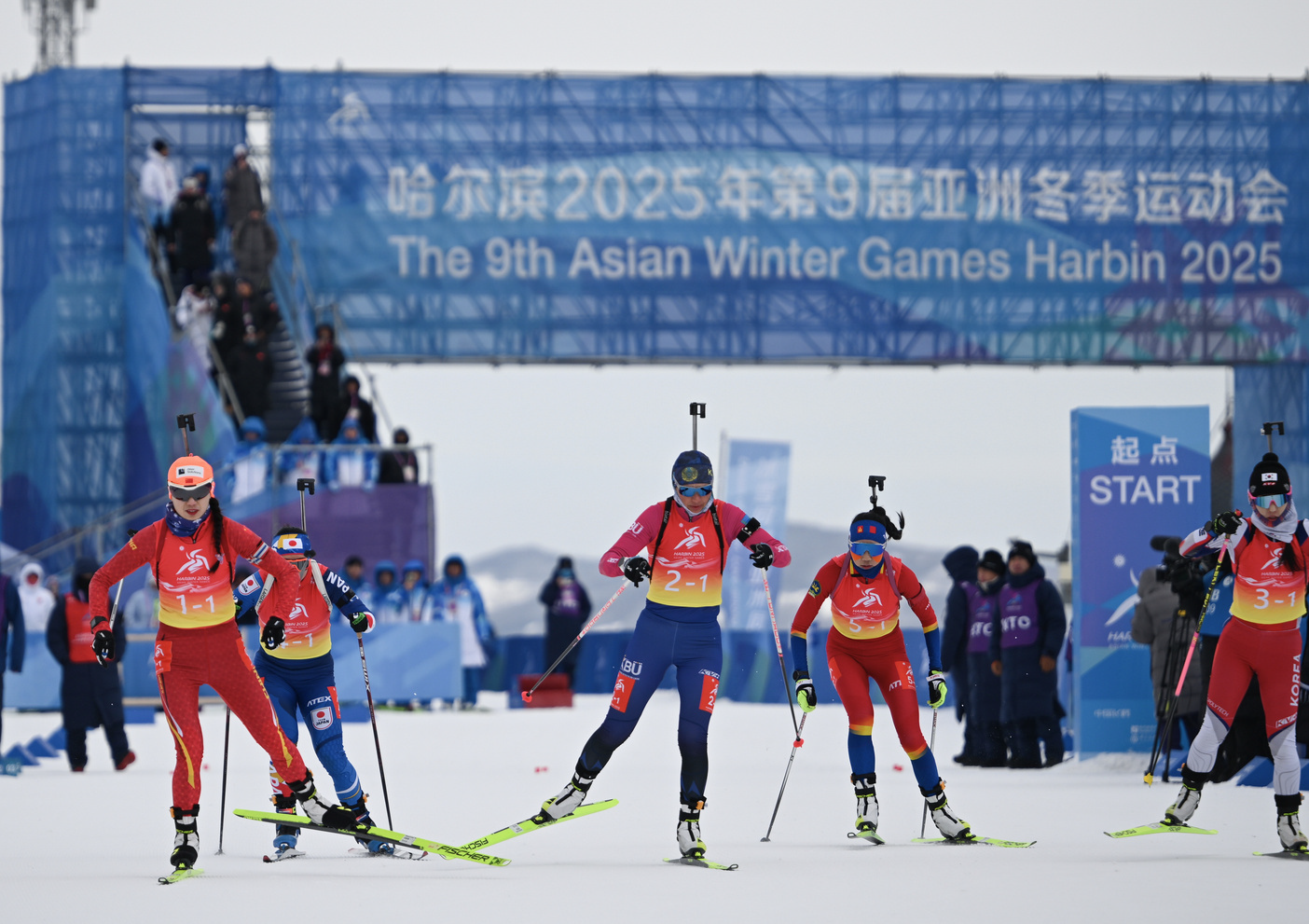
In disciplines such as biathlon, technology is also a safety tool. Synchronization between skiing and shooting requires precise control of timing, zones, and athlete positioning. Automated registration systems and specialized cameras ensure not only competitive accuracy, but also that shooting conditions are safe and properly supervised.
Harbin 2025: How This Technology Operates in Extreme Conditions
One of the most recent examples of this technological evolution took place at the Harbin 2025 Asian Winter Games, where we managed the digital infrastructure, broadcast graphics, and timing, scoring, and results systems in an extreme cold environment.
More than 1,264 athletes, 64 events, and 11 sports relied on a digital ecosystem that processed over 45,000 venue accesses, 43,000 accreditations, and millions of data points in real time. The impact extended beyond the competition itself, encompassing the training of local technical teams and the creation of an operational legacy for future winter events.
This case illustrates how innovation enables competition to thrive even when nature puts every cable, sensor, and device to the test.